What we do
Accessibility
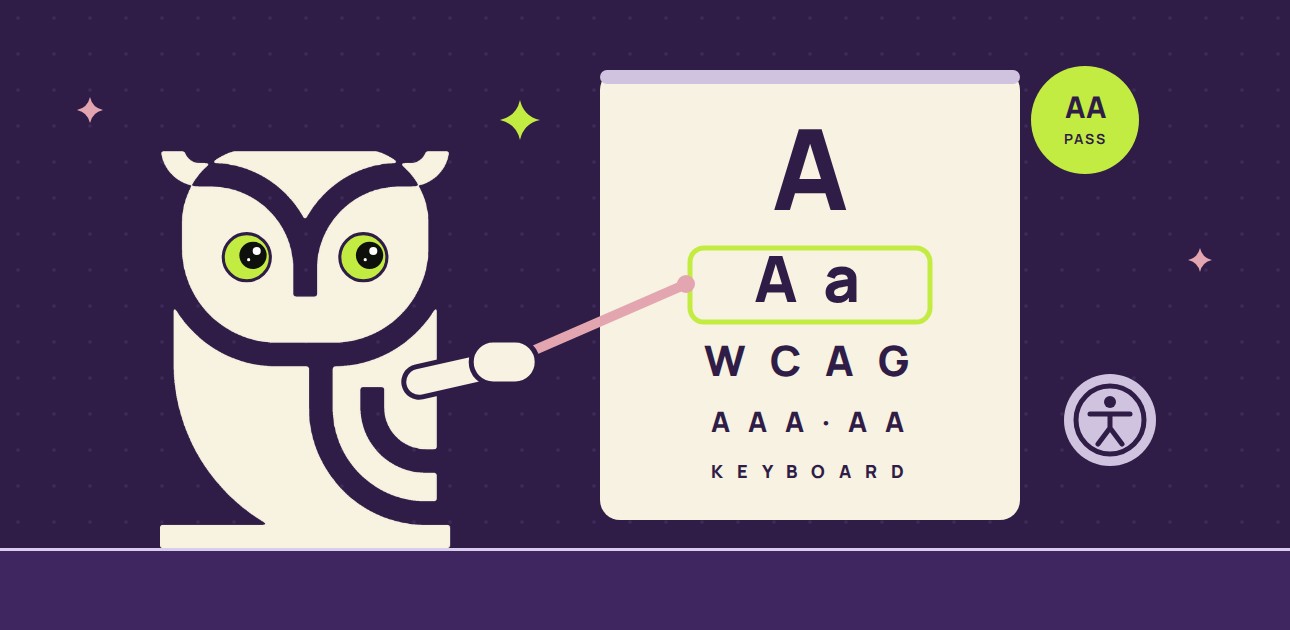
We build every website to meet WCAG 2.1/2.2 Level AA accessibility standards from the first draft, protecting you from legal risk while making your site genuinely usable for everyone.
What's included
Web Content Accessibility Guidelines
We comply with the Web Content Accessibility Guidelines: the internationally recognised standard for making websites usable by people with disabilities, published by the W3C (World Wide Web Consortium), the organisation that sets core web standards globally.
What it actually covers
WCAG is built around four core principles, often remembered by the acronym POUR:
- Perceivable — information must be presented in ways users can perceive. E.g. images need alt text for screen readers, videos need captions, text needs sufficient colour contrast against backgrounds.
- Operable — users must be able to navigate and interact with the interface. E.g. everything usable via keyboard alone (not just mouse), no content that flashes in ways that could trigger seizures, enough time to read/interact with content.
- Understandable — content and interface behaviour must be clear and predictable. E.g. readable language, consistent navigation, clear error messages on forms.
- Robust — content must work reliably across different browsers, devices, and assistive technologies (like screen readers), including as technology evolves.
The compliance levels
WCAG defines three levels of conformance:
- Level A — the minimum, most basic accessibility requirements
- Level AA — the standard most businesses and governments target (and often legally required) — this is what "WCAG compliant" usually means in practice
- Level AAA — the highest, most stringent level, often not fully achievable for entire sites (some AAA criteria are very restrictive, e.g. extremely high colour contrast requirements)
Why it matters for our clients specifically
- Legal exposure: in Australia, the Disability Discrimination Act 1992 has been used in real legal cases (most famously against the Sydney Olympics website in 2000) to enforce web accessibility — non-compliant sites carry genuine legal risk, not just an ethical concern.
- Government and NFP clients often require it explicitly; council and government tenders frequently specify WCAG 2.1 or 2.2 AA compliance as a mandatory requirement.
- SEO and usability benefits: many WCAG practices (proper heading structure, alt text, clear navigation) directly overlap with good SEO practice — so accessibility work often improves search ranking as a side effect, not just compliance.
Current version
WCAG 2.2 is the latest published version (released October 2023), building on 2.1 and 2.0 with added criteria – we currently target 2.1 or 2.2 at Level AA as the practical, expected standard.
From the blog
Reading on accessibility
- 01How a B&B or Holiday Stay Can Get More Direct BookingsSelling online · 22 Oct 2026
- 02What a Winery or Cellar Door Website NeedsSelling online · 22 Oct 2026
- 03A Café or Restaurant Website That Brings People InGetting found · 22 Oct 2026
- 04What a Tradie Website Needs to Win More JobsGetting found · 22 Oct 2026
More from the blog